
SPAM: An Unlikely Korean Icon
There are few foods whose cultural journey is quite as unexpected as SPAM’s in South Korea.
Here in Britain, SPAM comes with baggage. It conjures memories, often inherited from our parents. Of rank school dinners, post-war cooking, belonging to a particular era of British food that we have largely been eager to move on from.
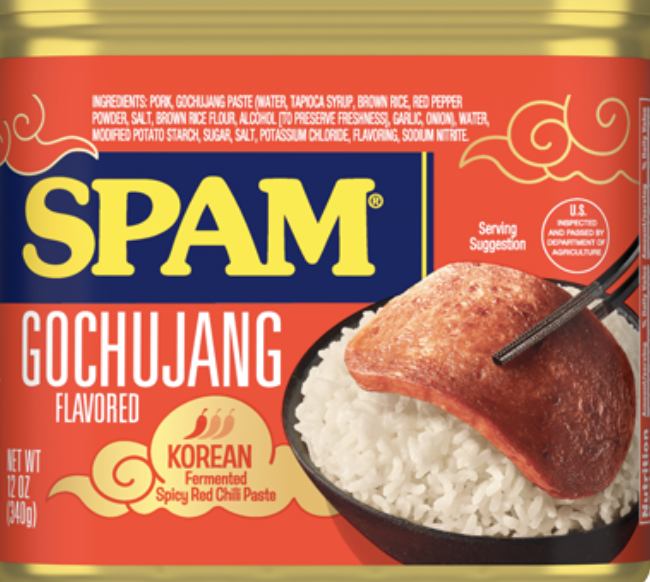
Travel to South Korea and the same little blue and yellow tin tells a very different story.
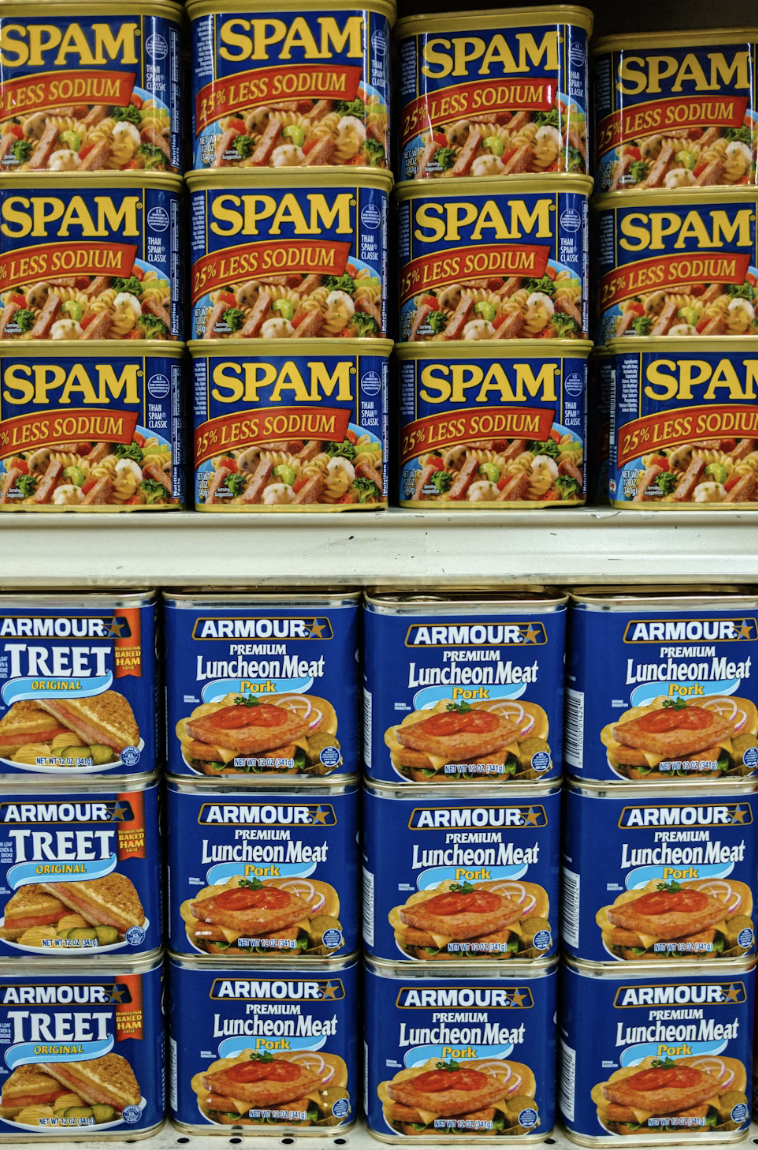
SPAM first became widely available in Korea during and following the Korean War, when food shortages were severe and meat was difficult to come by. Around American military bases, surplus foods, canned meat, sausages and baked beans among them began finding their way into local communities. They were unfamiliar ingredients, but also valuable sources of protein.
One of the most enduring dishes to emerge from this period was budae-jjigae, literally “army base stew”. The dish is a remarkable snapshot of a particular moment in Korean history. American ingredients such as SPAM and hot dogs were cooked with unmistakably Korean flavours: kimchi, gochujang, garlic and chilli, often alongside instant noodles, tofu and spring onions. Born from scarcity and improvisation, it became something entirely its own, rich, spicy, salty and deeply comforting.
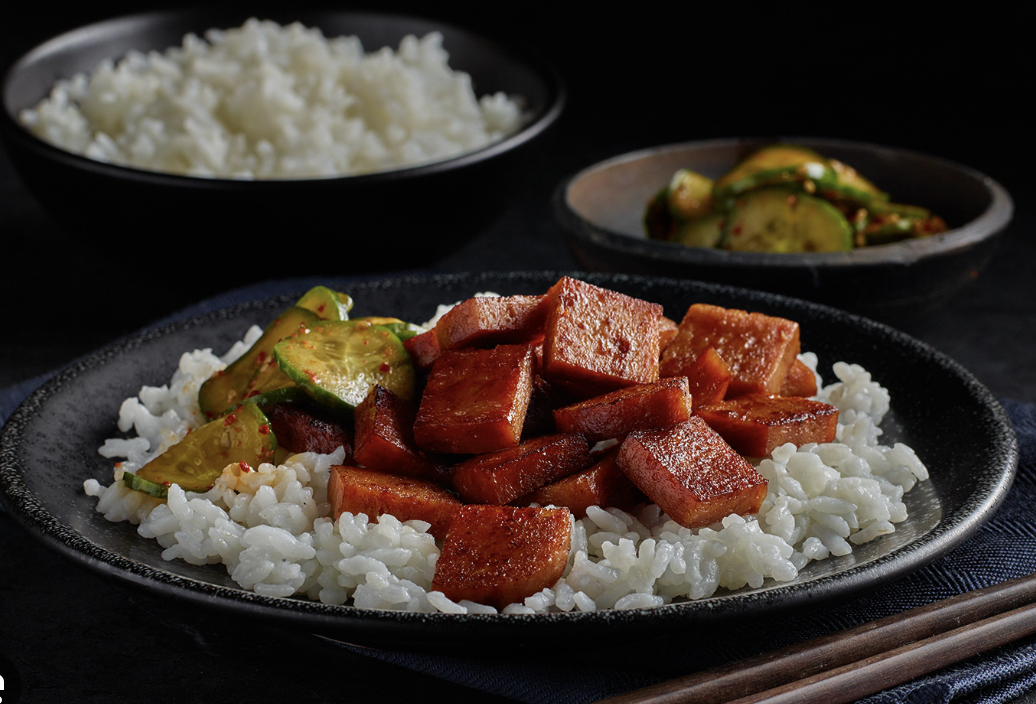
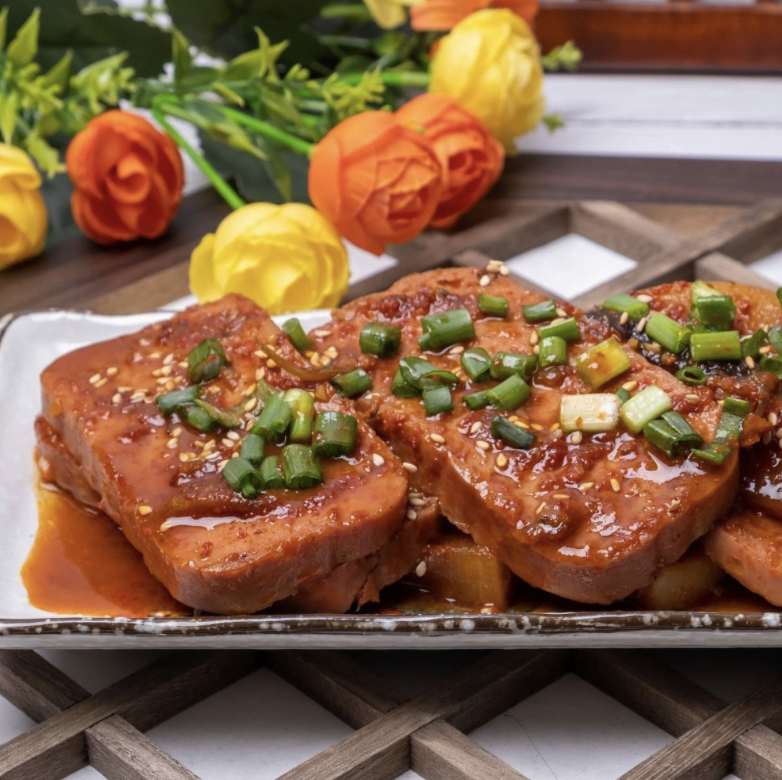
What makes SPAM particularly interesting, though, is that it didn’t disappear when those circumstances changed. As South Korea transformed economically, SPAM remained. Rather than being remembered solely as a substitute for fresh meat, it was absorbed into the country’s everyday repertoire. It found its way into fried rice, kimchi jjigae, gimbap and simple meals eaten at home. Slices are fried until their edges caramelise and served alongside rice; cubes are stirred through dishes where their saltiness becomes part of the seasoning.
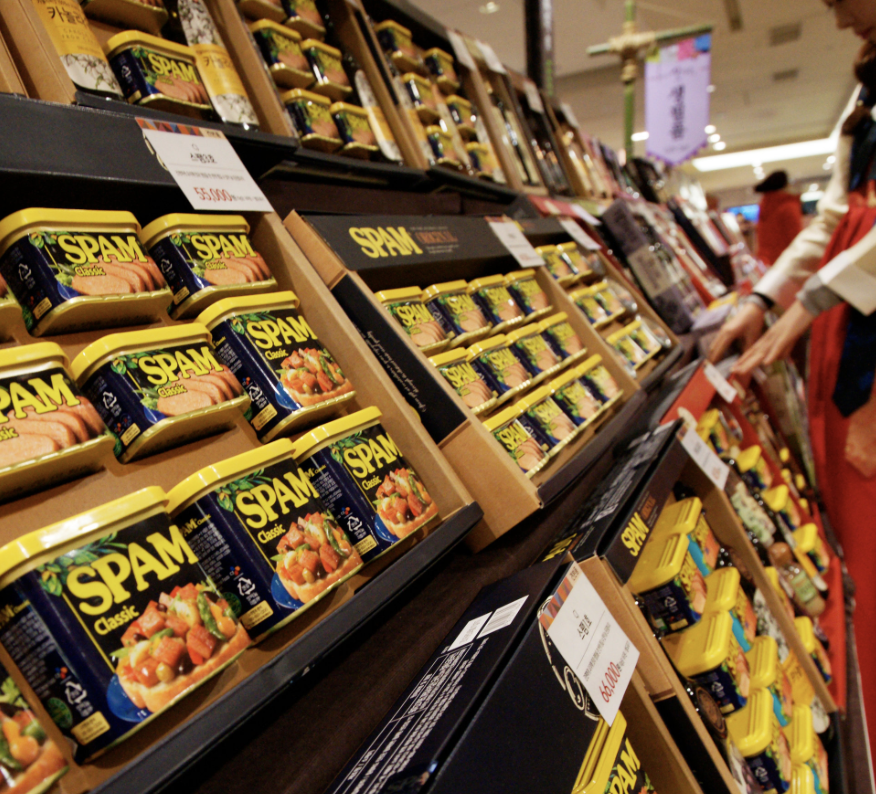
Korea didn’t simply inherit SPAM. Korean cooking changed what SPAM meant. And perhaps nowhere is that more apparent, particularly through British eyes than in the SPAM gift set. Walk through a Korean supermarket in the weeks before Chuseok or Seollal and you’ll find immaculate presentation boxes filled with carefully arranged tins of SPAM. For those of us who associate it with stories of British school dinners, the idea of arriving at someone’s home bearing a beautifully presented box of it feels wonderfully incongruous.
But in Korea, it makes considerably more sense. In the decades following the war, American products carried associations of abundance and prosperity. Meat itself had value, and SPAM, convenient, long-lasting and once relatively difficult to obtain, acquired a status far removed from its reputation as a humble pantry staple in Britain.
That association has proved remarkably durable. SPAM gift sets remain a familiar part of Korean holiday culture, sitting alongside boxes of fruit, cooking oils and other practical luxuries. It’s a curious reversal of fortunes for an ingredient that, elsewhere, has spent decades trying to shake off its reputation.
Today, a tin opened in Seoul might be destined for gimbap, fried crisp at the edges for breakfast, or dropped into a fiercely bubbling budae-jjigae. Come Chuseok or Seollal, that same tin might be lined up in a pristine presentation box and given as a gift.
Meanwhile, in Britain, SPAM still has the faint whiff of the school canteen about it.
Same tin. Very different afterlife.