
The Women Beneath the Water.
I like the idea of having to dive for my own dinner. There’s a primitive romance in emerging from the sea with a fresh catch in hand. And I grew up by the sea, so I feel perfectly home in the water and don’t mind the cold one bit. But I have fairly average lungs and I generally prefer seafood once somebody has done the difficult bit of removing it from the ocean. It’s all a bit of a fantasy really.
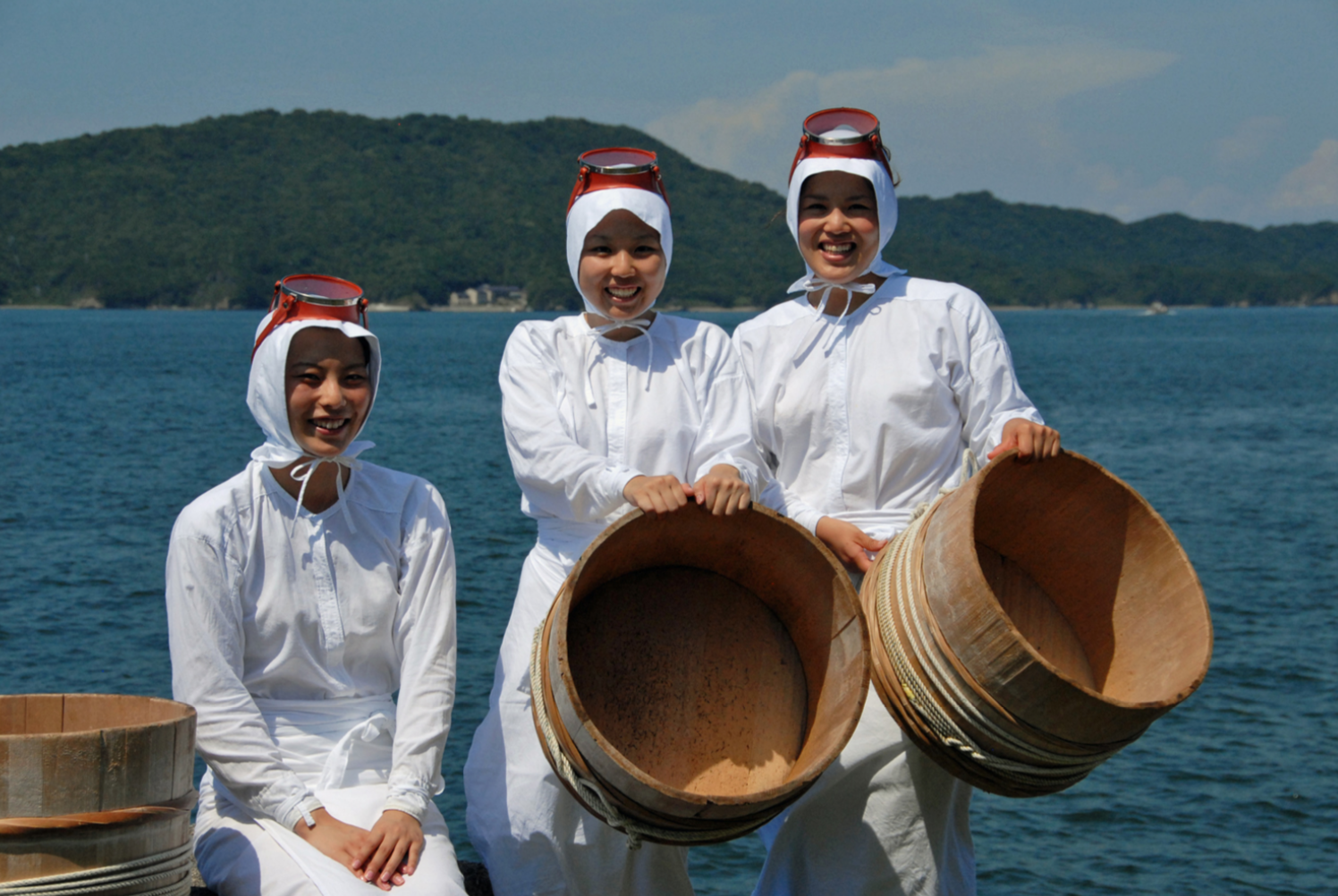
For generations of women living along Japan’s coast, around the rocky shores of the Shima Peninsula in Mie Prefecture, this has been work. They are known as ama, Japan’s free-diving fishers, and their history stretches back centuries. Without oxygen tanks, they dive beneath the surface to collect abalone, turban shells, seaweed, sea urchins and other things living on the seabed. It is physical, skilled and potentially dangerous work, and in many communities it has traditionally been performed by women. They’re truly awesome.
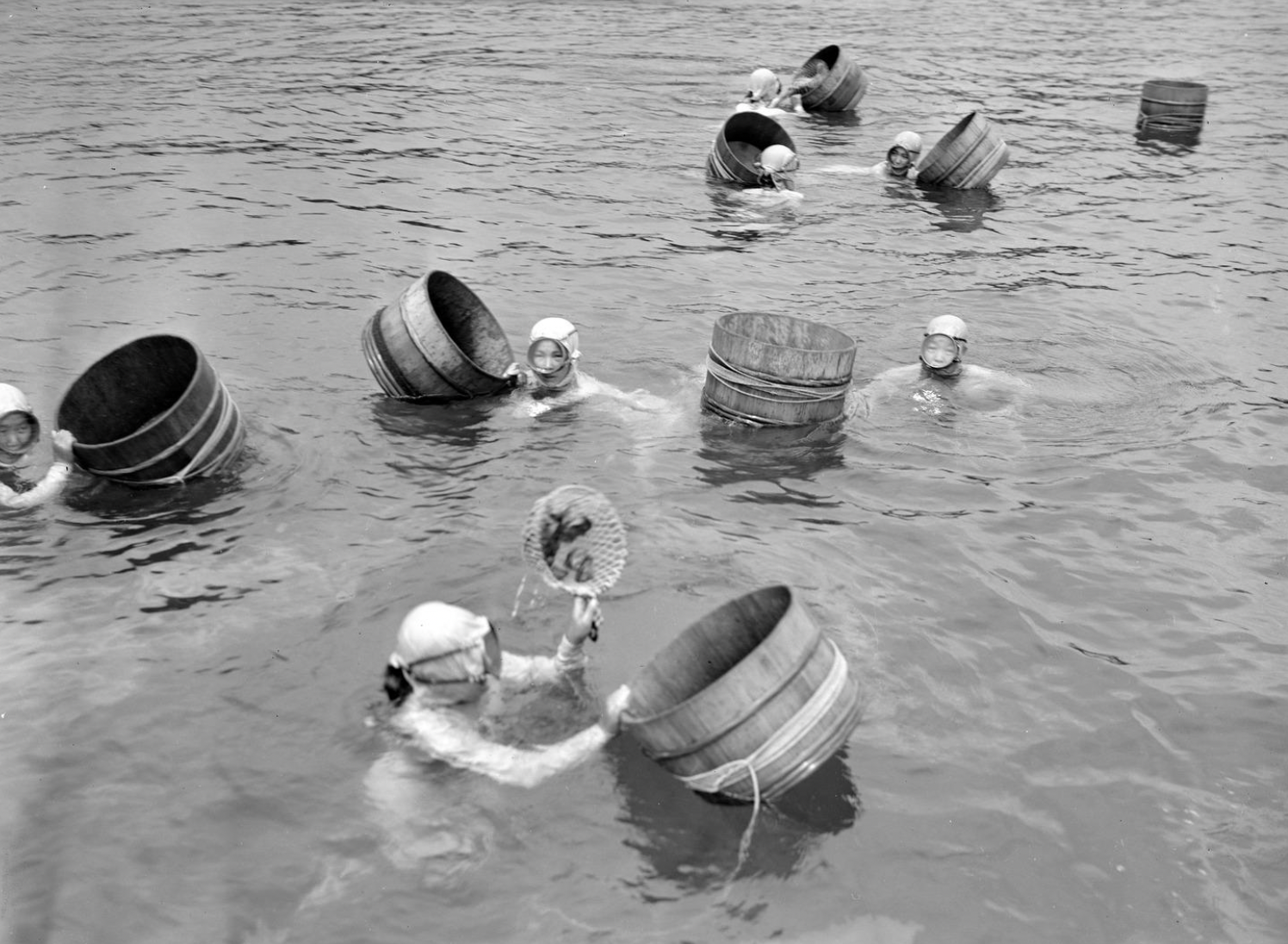
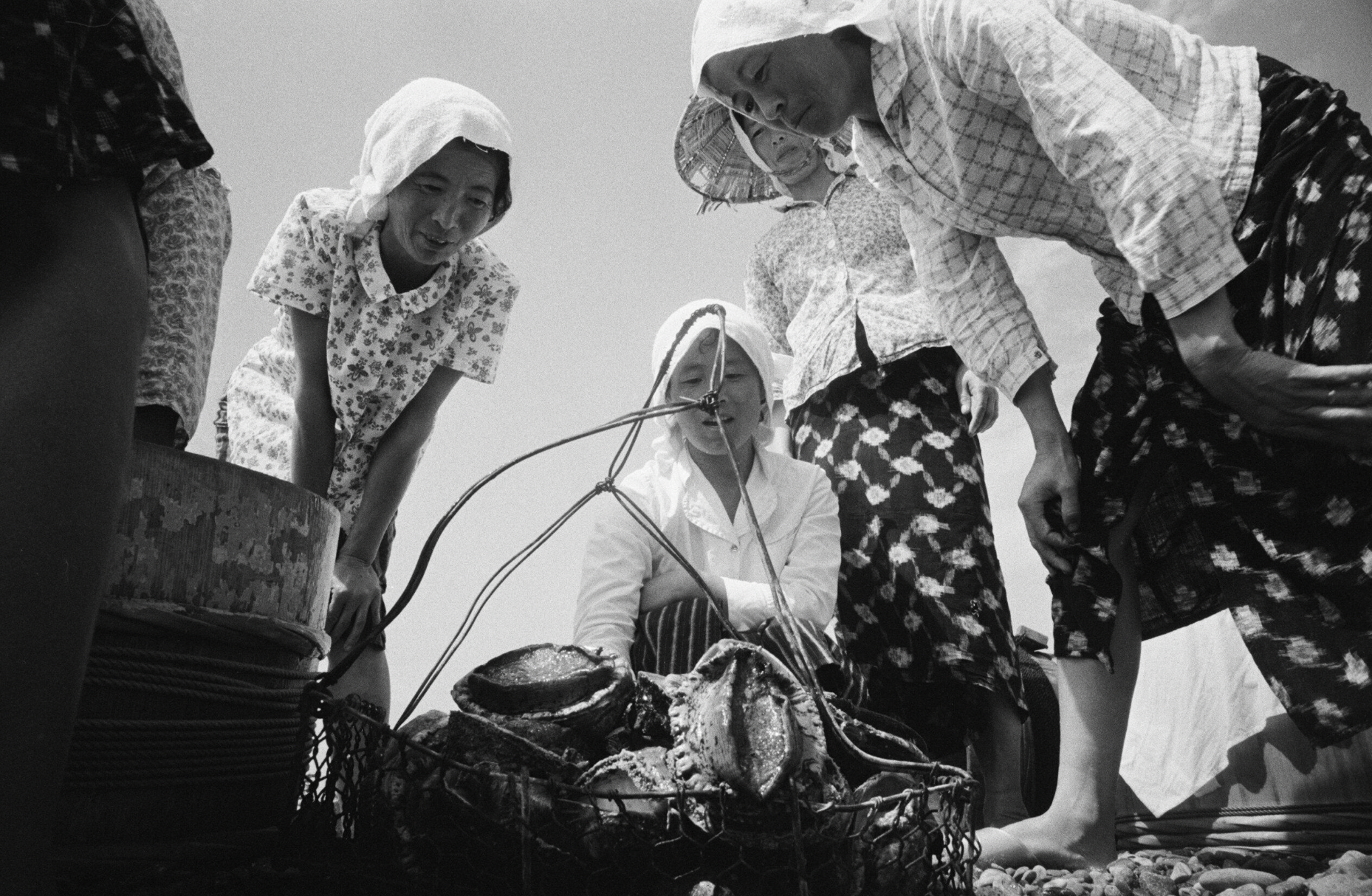
There is something about the ama that unsettles a fairly stubborn perception of women’s history. Men went out into the world to do the dangerous physical work and earn the money; women stayed closer to home, cooking, raising children and keeping everything else going. The ama make a rather great mess of it.
These were women who walked into the sea and disappeared beneath it, over and over again. Their work demanded strong lungs, an extraordinary tolerance for cold and an intimate knowledge of the patch of sea in which they worked. They knew its currents and rocks, where shellfish hid and when the weather was about to turn. A good diver could bring home something genuinely valuable.
Abalone was particularly prized, and finding it was not a matter of wandering into the water with a pair of goggles and hoping for the best. The sea had to be learned. That knowledge took years to acquire and was often passed from one generation of women to the next.
It is tempting to know all this and turn the ama into a feminist fairy tale. Here, after all, were women doing work many men could not do, earning their own money and becoming indispensable to the communities around them. Japan’s original feminists practically writes itself.
The trouble is what happened when they came ashore. Research into ama communities has found that the ability to earn money could give women greater freedom within their households and considerable standing among other divers. But being exceptionally good at your job is not the same thing as being powerful.
A study of ama on Iki Island in Nagasaki found that despite women’s importance to the fishing economy, their social position remained below that of men. Elsewhere in Japanese fishing communities, women could be the ones physically harvesting marine resources while membership of the fisheries cooperatives that controlled those resources belonged to their husbands.
Perhaps that should not surprise us. We have always been rather good at depending on women’s work without necessarily calling it expertise. Cooking is domestic duty when a woman does it every night for her family; put a salary and a restaurant kitchen around it and historically we have been much more comfortable treating it as a profession. Farming, fishing, childcare and caring have all performed versions of the same trick.
Food has a habit of hiding this. By the time a shellfish reaches a restaurant, it is an ingredient: admired for its rarity, provenance, texture and price. Follow it backwards, though, and eventually you arrive at a woman at the bottom of the sea.
And then you have to ask who gets paid, who owns what she brings up and who gets to make the rules. There is another reason to resist turning the ama into a romantic story of female toughness. The tradition itself is disappearing. In the Shirahama district of Minamiboso, the number of female ama fell by 70 percent between 2006 and 2023. By 2023, only forty remained, with an average age of seventy-two.
It is easy, from a distance, to feel melancholy about that. An elderly woman who can read the sea, dive without oxygen and return with food from the seabed possesses a kind of knowledge that is increasingly rare. When the last of those women stops diving, something remarkable will disappear with her.
But preserving a tradition requires somebody else to do the work. And perhaps we should be careful about celebrating generations of tough women without occasionally asking why they had to be so tough. Diving could give an ama money of her own, pride in her skill and a community of women who possessed knowledge that was entirely theirs. It could offer freedoms unavailable to other women. It was also cold, dangerous, exhausting work that younger generations are understandably not rushing to inherit.
This is what makes the ama more interesting to me than the familiar story of extraordinarily resilient women. Their strength was real. So was their skill. But neither automatically bought the sort of power we like to imagine follows naturally from them.
Underwater, things were unusually clear. An ama’s lungs, judgement and knowledge determined whether she came back with anything worth selling. Nobody watching her surface with a mollusc in hand could reasonably doubt who had done the work. Things became rather more complicated once she was back on land.