

There Is No Such Thing As Cheesecake.
Let’s be frank about this: cheesecake is not one universal thing. It’s a loose term used to describe a type of sweet that shares certain characteristics but can taste distinctly different. Often to my own shock and occasional disappointment. It’s like categorising a tiger as a house cat, bringing it home and then complaining why it has eaten your siblings. I wouldn’t even call it the same culinary species. I’ve had “cheesecakes” from all over the world; some I love, others I loathe.
This finicky chain of thought has drip fed into my subconscious ever since my housemate brought back a cheesecake from our local Cantonese bakery. It was crazy expensive and aesthetically outstanding, which, naturally, made me very excited to eat it. One bite later, I was genuinely a little taken aback by its sickly cheesiness. I know some people prefer their cheesecake on the tangier side, but this had none of the polite sweetness I was used to. It really made a statement about the word cheese in the name.
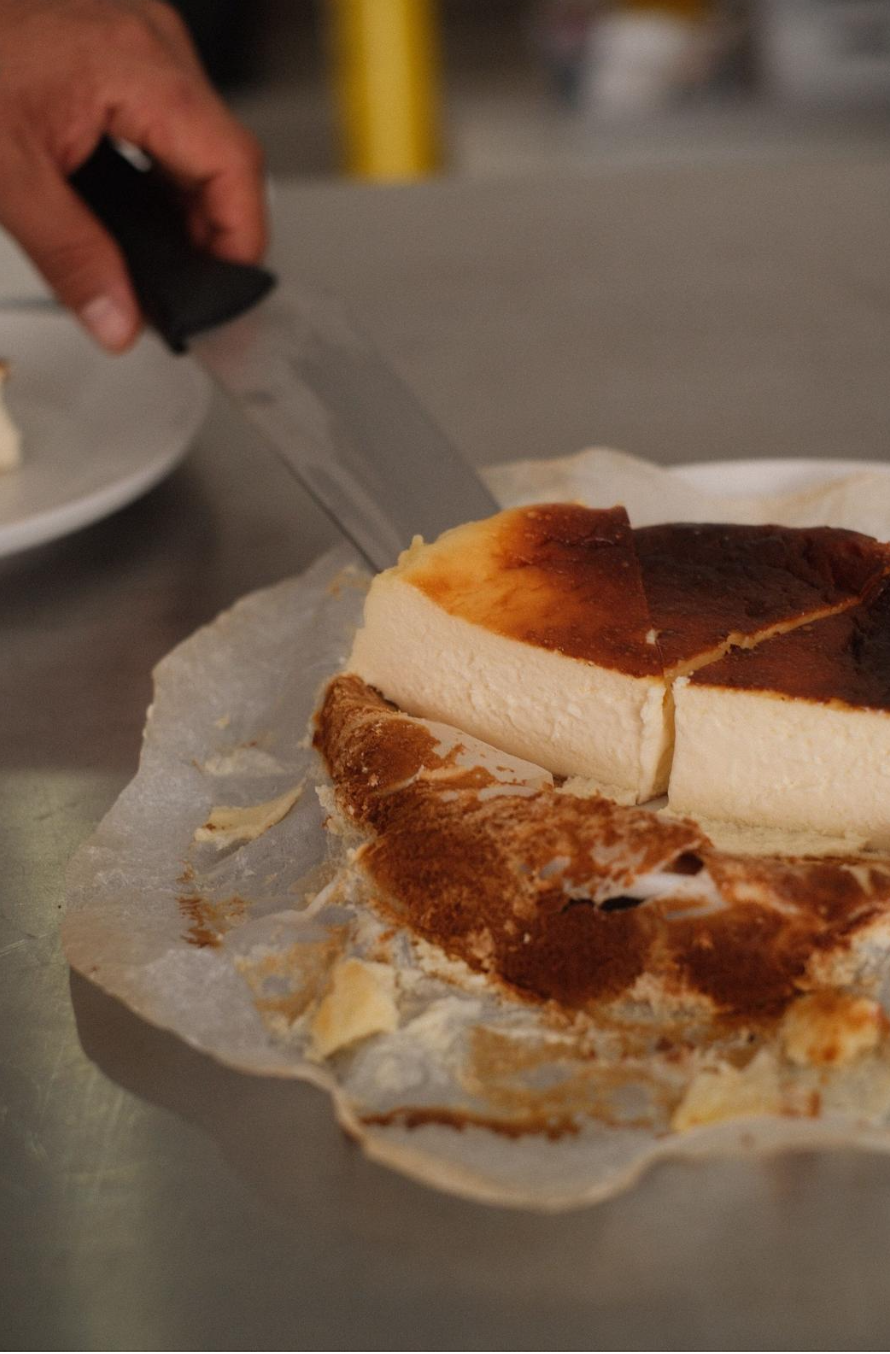
The strange thing was that I couldn’t even say it was a bad cheesecake. It was probably a perfectly good example of whatever kind of cheesecake it was supposed to be. The problem was that it didn’t fit the version of cheesecake I had built up in my head over the years. For me, cheesecake is creamy, sweet and relatively restrained. I’ve made plenty of my own, particularly during my chalet-boy days, usually with raspberries or cherries paired with a dark chocolate biscuit base. The kind of dish that sits somewhere between dessert and something you could happily eat far too much of after dinner.
But then there’s New York cheesecake, which takes the same basic idea but makes it so American. It’s dense, rich and unapologetically substantial, the sort of dessert where a modest slice does the job. Japanese cheesecake moves in almost the opposite direction. It’s light, airy and trembling, somewhere between a soufflé and a sponge, as though cheesecake had been relieved of its obligation to be heavy. And then there is Basque cheesecake, perhaps the most seductive of them all. Its top is taken far beyond golden to a deep, burnished brown, bringing a slight bitterness that cuts through the richness beneath. Inside, it barely seems set: soft, custardy and almost molten at the centre. What’s clever about it is that the qualities we’re usually taught to avoid in baking — too dark on top, too soft in the middle, a little rough around the edges are exactly what give it its character. It doesn’t look engineered into perfection. It looks gloriously unconcerned with it.
They are all called cheesecake, but they don’t necessarily feel like the same food. That is what I find so interesting about the relationship between words and food. We give things names and then assume those names come with a fixed set of rules. We talk about cheesecake as though everyone knows exactly what we mean, when really we are often talking about whatever version we happened to encounter first, or simply the version we prefer.
We do this constantly with food. We think a dish has boundaries and “authenticity” until we travel somewhere and discover that those rules only existed in our own heads. The further you travel, the more often you discover that what you thought was a definition was really just a habit. Cheesecake is particularly good at exposing this because the name makes it sound much more specific than it actually is. Does it have to contain cream cheese? Some cuisines have evolved without relying on this ingredient at all. Does it need a biscuit base? No. Does it even have to be baked? Definitely not. How cheesy does it need to taste? That’s up to debate.
Maybe cheesecake isn’t really a recipe at all. Maybe it is more of an idea: something sweet and rich, usually creamy, with enough tang to stop the whole thing becoming cloying. I quite like that about it. Food is full of arguments about the“right” way of doing things: the right ingredients, the right technique, the right place. Cheesecake seems to have avoided most of that. It has been pulled in completely different directions and somehow kept the same name.
And perhaps that is why I’ve become more fond of my disappointing Hong Kong cheesecake. At the time, I thought it had got cheesecake wrong. Looking back, I think it simply exposed the fact that my idea of cheesecake was never really a definition at all. It was just the version I knew. There are plenty of cheesecakes I would choose over it. I still want my raspberries and dark chocolate, and I will happily take a slice of Basque or New York cheesecake when given the opportunity. But somewhere in Hong Kong there is still a cheesecake that tastes far more of cheese than I think a cheesecake should, made by someone who presumably thinks that is exactly the point.
Perhaps that’s all cheesecake really needs to be: not one particular recipe, but a name broad enough for everyone to make their own argument about what belongs underneath it. There is no such thing as the cheesecake. There are just cheesecakes. And, occasionally, one that reminds you why the distinction matters.